AdSense

Showing posts with label apple. Show all posts

Thursday, March 13, 2014

Internet turns 25: 8 things you should know

Imagining life without Google, Facebook and Twitter is almost impossible today. But, internet itself was a dark reality until 25 years ago. It was on March 12, 1989 that the world wide web (www) was born, thus marking its 25th birth anniversary today. But it was only in the mid-90s that web came into public life and changed the world in so many ways than one could have imagined.
According to web inventor Tim Berners-Lee, it was invented for very different reasons. On its silver jubilee, here’s everything you need to know about the web …

Birth of web
The world wide web (www) was invented by Tim Berners-Lee – a British scientist at CERN – on March 12, 1989. The original idea behind the web was to meet the demand for automatic information-sharing between scientists working at universities and institutes around the world by merging technologies of personal computers, computer networking and hypertext into a powerful and easy-to-use global information system.

The proposal
Tim Berners-Lee teamed up with Belgian systems engineer Robert Cailliau and presented the first proposal for www in 1989. In the following year, on November 12, 1990, the duo published a formal proposal highlighting all the important concepts behind the web.
The proposal described a "hypertext project" called "WorldWideWeb" in which a network of "hypertext documents" could be viewed by “browsers”. A prototype of the software for a basic web system was already being demonstrated. The first examples of this interface were developed on Apple’s NeXT computers.

The first website
European research organization CERN was the birthplace of web or www. The first website at CERN was also the first website in the world. CERN dedicated the website to the “WorldWideWeb project” and it was hosted on Berners-Lee's NeXT computer.
The website had a simple interface and described the basic features of the web, how to access other people's documents and how to set up your own server.

First web server outside Europe
At Stanford Linear Accelerator Center (SLAC) in California, the first web server out of Europe was installed on December 12, 1991. Then, in 1993, the National Center for Supercomputing Applications (NCSA) at the University of Illinois launched Mosaic browser, which was easy to run and install on ordinary PCs and Macintosh computers.

Web goes public
It was April 30, 1993 when CERN put the world wide web software in the public domain. To increase its reach, CERN made the next releases available with an open licence along with a basic browser and a library of codes.
By the end of 1994, the web had 10,000 servers - of which 2000 were commercial - and 10 million users.

The line-mode browser
The browser which Berners-Lee had designed on his NeXT computer was far too advanced and complicated for other computers of that time and thus there was a need for a much simpler browser that could work with a wide variety of computers and terminals, some of them rather basic. The line-mode browser was nothing but a compilation of links. No images, no colours, no clicking – it was just content.
The browser was so simple that even a computer with a screen only capable of showing 24 rows of 80 characters could run it. For a modern audience, it was an unimpressive medium.

Tech prediction goes wrong
"Almost all of the many predictions now being made about 1996 hinge on the internet's continuing exponential growth. But I predict the internet will soon go spectacularly supernova, and in 1996 catastrophically collapse." These were the words of Robert Metcalfe, the inventor of the Ethernet and founder of 3Com. His prediction turned out to be far from accurate, as the world wide web continues to not only grow but drive big changes across the globe.

Web is not internet

Many of us confuse the two and believe web and internet are same. However, the truth is that web is not internet.
The internet is a global system of interconnected computer networks. It is a ‘path’ on which the web runs.

Wednesday, March 12, 2014

Apple's New Spaceship Headquarters in Cupertino (pics)


    Apple, Cupertino, Calif.Rendering of Apple's new campus in Cupertino, Calif., expected to open                                                                    in 2016.
 The new 2.8-million sq. ft. facility was brought to the Cupertino city council by late CEO Steve Jobs. Its                                                                   diametre is greater than that of the Pentagon.
 The project is meant to incorporate and develop much of the surrounding green space, with a system of bike lanes, bio-fuel buses and its own natural gas-burning power plant.


Thursday, March 6, 2014

Researchers say a little alcohol everyday helps improve your immune system

Researchers have suggested that moderate drinking of alcohol may actually bolster one's immune system and help it fight off infection.

To conduct the study, the researchers trained a group of 12 rhesus macaques to consume alcohol — a 4 percent ethanol mixture — of their own accord.

Researchers vaccinated the monkeys against small pox as part of the study. They then separated 
the animals into two groups — those with access to the 4 per cent ethanol and those with access to sugar water. All of the animals had regular access to pure water, and to food.

The researchers then monitored the animals' daily ethanol consumption for 14 months. And the animals were vaccinated again, seven months after the experiment began.

The monkeys' voluntary ethanol consumption segregated them into two groups. One group was made up of heavy drinkers, those that had an average blood ethanol concentration greater than 0.08 per cent — the legal limit for humans to be able to drive a vehicle. The other group was made up of moderate drinkers, with an average blood ethanol concentration of 0.02 to 0.04 per cent.

Prior to consuming the alcohol, all of the animals showed comparable responses to the vaccination. But after exposure to the alcohol, the two groups of monkeys responded in very different ways to the vaccination.

The heavy drinkers showed greatly diminished vaccine responses compared with the control group of monkeys who drank the sugar water. But the more surprising finding: the moderate-drinking monkeys displayed enhanced responses to the vaccine compared to the control group. Moderate drinking bolstered their bodies' immune systems.

Sunday, March 2, 2014

Holographic Technology: Make the world your Office

It could be as simple as negotiating an elaborate deal with a businessman — even when you are sitting in an office on the other side of the world. Or it could be as complex as a hospital’s chief cardiologist making final checks before surgery — for a patient lying in an isolated village 500 miles away. Or it could be as personal as making sure you see your children when they get home from school — even though you are in a different time zone.

In the next few years, a technological leap in video communication is about to change the way we interact, work and live our lives.

Software such as Skype – which boasted 299 million users in June 2013 — and Apple’s FaceTime have already transformed personal relationships, meaning that families and friends can stay in touch from anywhere in the world.

But now teleconferencing — and its modern appellation, telepresence — is beginning to change our professional lives, too.

The last few years have already seen a sharp rise in “remote working” — employees working from home. According to a 2012 Ipsos/Reuters poll, around one in five people in the world frequently “telecommute” to work, and nearly 10% work remotely from home every day.
Meanwhile, companies expanding around the globe face pressure from shareholders and regulators to minimise staff travel between offices for meetings, enabling more energy-efficient choices and reducing expenses. 

A proliferation of better-quality, cost-effective technology addresses this need. The TP3200 video conferencing system for example, was recently launched by communications technology provider Huawei Enterprise. It is designed especially for group meetings and uses a specialised image-processing device — a so-called co-optical centre camera — to provide the world’s first panoramic telepresence system.

“HD (high-definition)-resolution cameras and reliable broadband connectivity have vastly improved the teleconferencing experience,” says Jack He Liang, video conferencing director at the firm. 

“More people, and more employers, are beginning to see the benefits of video communication.

“Not only can it reduce costs, improve efficiency and save on human resources, but video conferencing also makes it easier to convey your idea. When you can communicate with your eyes and face, both sides [of the meeting] feel more confident.”

Teleconferencing no longer requires participants to submit to a fixed system of technical standards. Instead, many systems now utilise what is called BYOD.
“It’s short for ‘Bring Your Own Device,’” says He Liang. “The system recognises that many workers already own tablets, smartphones and laptops with cameras — and integrates them.”
The result is a step change in how we see, and carry out, our jobs.

So it is little surprise that global businesses are expected to spend $3.75bn (£2.3bn) on videoconferencing technology by 2016. Smart 2020, a study commissioned by the Global e-Sustainability Initiative, (a programme launched in 2001 to promote sustainable development in the ICT sector), found that US and UK businesses can save almost $19bn (£11.7bn) as a result of deploying 10,000 telepresence units by 2020.

By cancelling the need for long- and short-haul executive flights between offices, the same study suggested that teleconferencing technology and other virtual tools could reduce global annual greenhouse gas emissions by 15% by the year 2020.

But that is just the start. The next generation of video telepresence systems aims to fit even more seamlessly into our lives — by adding realistic 3D capabilities.

The technology, known as holographic telepresence, is more Star Trek than staff meeting. Instead of a flat screen, a three-dimensional moving image of a user is reproduced at each meeting location.
Currently the effect is not a true hologram. The technology company Musion, based in the UK, adapts an illusion commonly used in theatres and theme parks known as the Pepper's ghost effect. An HD projector illuminates a thin, effectively invisible, sheet-like “foil” from a 45-degree angle, creating a 3D image almost indistinguishable from an actual person. The Musion TelePresence system can now transmit full-sized people and objects in real-time “without any significant delay in communication”, the company says.

The system achieved a Guinness World Record in 2012 by helping Indian politician Narendra Modi deliver a 55-minute campaign speech to audiences in 53 different locations simultaneously. And in the entertainment world, Musion was one of three companies credited for digitally resurrecting rapper Tupac Shakur onstage at the 2012 Coachella festival.

But true holograms might not be far away. Leia Display System is currently working on an alternative technology. The Polish company has built a holographic room, measuring 3m (10ft) by 2.5m (8ft), which uses laser projectors to beam 3D images onto a thin cloud of water vapour — providing not only a giant 3D multi-touch screen, but also the ability to walk through the images and see them from any point of view.

Holographic telepresence like this has obvious potential beyond from the business world. Healthcare is already being revolutionised by telemedicine, allowing patients to be treated remotely, whether in isolated areas or on a distant battlefield.

Hologram technology could also see advances in areas like education, enhanced movies, television programming, advertising, gaming, 3D mapping, aerospace navigation and robot control.
Still other improvements could be imminent. The Massachusetts Institute of Technology (MIT) in the US is examining how physical surfaces can be manipulated by gestures, with objects being resized, reshaped or moved remotely by people thousands of miles away. This offers the potential for virtual offices, where hundreds or even thousands of people could collaborate on a product without ever touching it.

Researchers at the University of Tokyo are also working on adding haptic feedback (vibrations, for example) to holographic projections by using ultrasound waves. A user can touch and interact with a hologram and receive tactile responses as if the holographic object were real.

In an IBM survey of 3,000 researchers, respondents named holographic video calls as one of the five technologies they expect to see in place by 2015.

There are obstacles to using these technologies, of course. Not least is the cost of holographic technology: Musion currently rents its system for around $65,000 (£40,000). Live telepresence also needs a fast, direct connection of 10-20 megabytes per second (Mbps), as the recordings are of higher quality.

“But thanks to 4G and LTE networks — and 5G coming soon — bandwidth is no longer a problem,” says Huawei Enterprise’s He Liang.

“[Telepresence] will mean that we don’t have to work in an office,” he explains. “That we don’t have to travel miles to be treated by a doctor. That we can interact with our families from a different country. It will begin to change the world we live in.”

Huawei released the industry's first panoramic telepresence system(TPS). This TPS adopts Huawei's patented co-optical center camera with panoramic gapless imaging and image stitching technologies, giving users a truly immersive experience.

Huawei's panoramic TPS provides open interfaces to interconnect with the systems of other vendors, thereby protecting the customer's investment.

Huawei's panoramic telepresence system is able to save up to 30% TCO for the customer because it requires 25% less bandwidth, 42% less energy, and 26% less physical space.

Friday, February 28, 2014

A phone that self-destructs if tampered with

NEW YORK: Boeing Co on Wednesday unveiled a smartphone that appears to come straight from a James Bond spy movie. In addition to encrypting calls, any attempt to open the casing of the Boeing Black Smartphone deletes all data and renders the device inoperable. 

The secure phone marks an extension of the communications arm of the Chicagobased aerospace and defence contractor, which is best known for jetliners and fighter planes. Such a phone might have prevented damage to Washington's diplomacy in Ukraine from a leaked telephone call. A senior US state department officer and the ambassador to Ukraine apparently used unencrypted cellphones for a call about political developments in Ukraine that became public. 

Boeing's tamper-proof phone is aimed at people working in defence and homeland security who need to keep communication and data secure, according to Boeing and filings with the US Federal Communications Commission . Hardware media encryption and configurable inhibit controls are embedded to protect the device, its data, and the transmission of information, significantly reducing the risk of mission compromise due to data loss, the company said. 

Made in the US, the phone runs on Google Inc's Android operating system. The 5.2-by-2 .7-inch (13.2-by-6 .9 cm) handset, slightly larger than an iPhone, uses dual SIM cards to enable it to access multiple cell networks instead of a single network like a normal cellphone. Due to the phone's security features, Boeing is releasing few details about the wireless network operators or manufacturer it is working with, and has not provided a price or date by which the phone might be widely available, but said it has begun offering the phone to potential customers. 

Boeing's website says the phone can be configured to connect with biometric sensors or satellites. Other attachments can extend battery life or use solar power. The phone can operate on the WCDMA, GSM and LTE frequency bands and offers Wi-Fi and Bluetooth connectivity . The company has been developing the phone for 36 months, said Boeing spokeswoman Rebecca Yeamans. 

"We saw a need for our customers in a certain market space that Boeing could meet with its technology expertise ," she said. A sample purchase contract submitted to the FCC says the phone would be sold directly by Boeing or its agents.

Monday, February 24, 2014

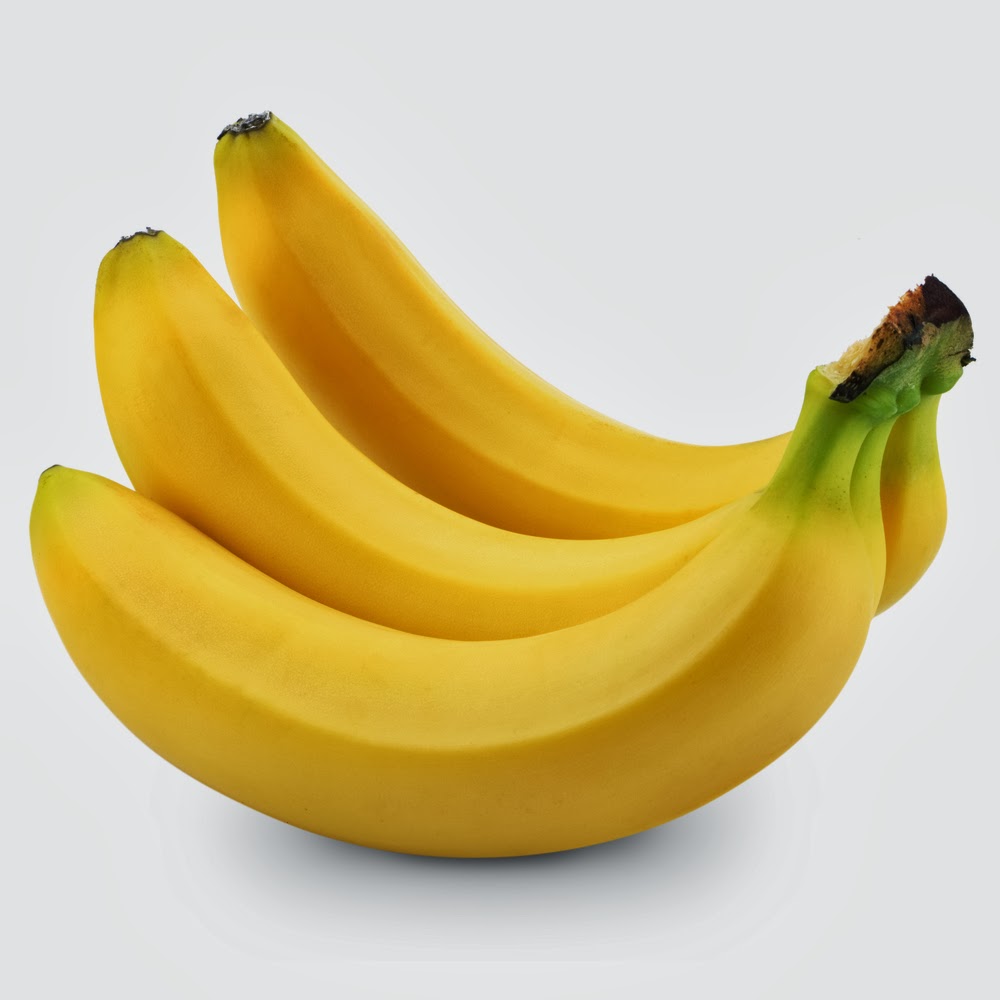
Banana: Health benefits

Rich in nutrients including vitamins A, B, C and E along with minerals like potassium, zinc, iron, etc, banana is a strong source of energy. Here are some other health benefits of this versatile fruit.

Controls blood pressure: According to research, the potassium in this fruit keeps the
blood pressure levels in check and it can also help decrease its levels.

Improves brain power: A good source of vitamin B, banana helps perk up nerve function and boosts learning abilities.

Decreases the risk of stroke: According to studies, regular consumption of a banana helps reduce the occurrence of 
stroke. Rich in antioxidants and dietary fibre, consumption of bananas is also said to reduce the risk of cancer.

Maintains bones: Probiotic bacteria present in bananas is known to absorb calcium in the body. Hence, it helps in building better bones.

Enhances digestion: The priobotics in banana help produce enzymes that enable absorption of nutrients, thus enhancing the digestive ability and preventing unfriendly bacteria from harming the body. Astringent in nature, raw bananas are effective in treatment for diarrhoea.

Relieves constipation: Pectin found in bananas helps to alleviate 
constipation and improves bowel function.


For questions specific to your health conditions, please write down in the comments section and we will answer it as soon as possible. Thanks

Apple peels help you lose weight

Ursolic acid - a waxy substance found in apple peel - increases muscle and brown fat in mice that are on a high-fat diet.

These mice burn more calories and have reduced 
obesity levels, pre-diabetes and fatty liver disease than the mice that do not receive the supplement. Researhers believe that this might be helpful in reducing obesity.

Until quite recently, researchers believed that only infants had brown fat, which then disappeared during childhood. However, improved imaging techniques have shown that adults do retain a very small amount of the substance mostly in the neck and between the shoulder blades. Some studies have linked increased levels of brown fat with lower levels of obesity and healthier levels of blood sugar and blood lipid, leading to the suggestion that brown fat may be helpful in preventing obesity and diabetes.

Obesity and its associated problems such as 
diabetes and fatty liver disease are increasingly common global health concerns. A new study by University of Iowa researchers shows that a natural substance found in apple peel can partially protect mice from obesity and some of its harmful effects.

The findings suggest that the substance known as ursolic acid reduces obesity and its associated health problems by increasing the amount of muscle and brown fat, two tissues recognised for their calorie-burning properties.

"From previous work, we knew that ursolic acid increases muscle mass and strength in healthy mice, which is important because it might suggest a potential therapy for muscle wasting," Adams says. "In this study, we tested ursolic acid in mice on a high-fat diet - a mouse model of obesity and metabolic syndrome. Once again, ursolic acid increased skeletal muscle. Interestingly, it also reduced obesity, pre-diabetes and fatty liver disease.

"Since muscle is very good at burning calories, the increased muscle in ursolic acid-treated mice may be sufficient to explain how ursolic acid reduces obesity. However, we were surprised to find that ursolic acid also increased brown fat, a fantastic calorie burner. This increase in brown fat may also help protect against obesity." 

Friday, February 21, 2014

Batteries that run on human movement

MELBOURNE: Scientists are developing gen-next batteries that capture the energy of our everyday movements, such as walking, to convert it into electricity to power cellphones and other devices. 

Researchers have for many years attempted to harvest energy from our everyday movements to allow us to trickle charge electronic devices while we are walking without the need for expensive and cumbersome gadgets such as
solar panels or hand-cranked chargers. 

Lightweight devices are limited in the voltage that they can produce from our low-frequency movements to a few millivolts. 

Now, Jiayang Song and Kean Aw of The 
University of Auckland, New Zealand, have built an energy harvester that consists of a snake-shapes strip of silicone, polydimethylsiloxane, this acts as a flexible cantilever that bends back and forth with body movements. 

The cantilever is attached to a conducting metal coil with a strong neodymium, NdFeB, magnet inside, all enclosed in a polymer casing. When a conductor moves through a magnetic field a current is induced in the conductor. 

This has been the basis of electrical generation in power stations, dynamos and other such systems since the discovery of the effect in the nineteenth century. 

Using a powerful magnet and a conducting coil with lots of turns means a higher voltage can be produced. 

In order to extract the electricity generated, there is a need to include special circuitry that takes only the positive voltage and passes it along to a rechargeable battery. 

The development of kinetic chargers has been stymied by current diode technology that requires a voltage of around 200 millivolts to drive a current. 

Song and Aw have now side-stepped this obstacle by using a tiny electrical transformer and a capacitor, which acts like a microelectronic battery. 

Their charger weighing just a few grammes oscillates, wiggling the coil back and forth through the neodymium magnetic field and produces 40 millivolts. 

The transformer captures this voltage and stores up the charge in the capacitor in fractions of a second. Once the capacitor is full it discharges sending a positive pulse to the rechargeable battery, thus acting as its own rectifier. 

The team concedes that this is just the first step towards a viable trickle charger that could be used to keep medical devices, monitors and sensors trickle charged while a person goes about their normal lives without the need for access to a power supply. 

The study was published in the International Journal Biomechatronics and Biomedical Robotics.